Showing posts with label wwrw. Show all posts

Wednesday, January 28, 2015

what we're reading wednesday: unwind (& sequels)


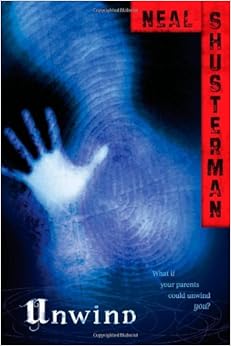
I recently finished a young-adult sci-fi (or dystopian maybe?) series that I've been working on for a couple years-- only just finished because the final book only just came out. There are 4 novels and a companion novella by Neal Shusterman-- Unwind, UnWholly, UnSouled, and UnDivided (and the novella is UnStrung).

I can't decide what I think of this series. It was very good, but I can't say that I loved it, because it was so disturbing. But I think I would recommend it BECAUSE it was so disturbing-- it was supposed to be.

The premise is as follows: sometime in the not-too-distant future (but several decades prior to the start of the series), the U.S. was ripped apart by a civil war fought over the issue of abortion. Part of the treaty included the Unwind Accord-- a law which made abortion illegal, but allowed parents to choose to "unwind" their teenage offspring. "Unwinding" means that all the teen's organs are harvested and distributed to those who medically need them (which technology had recently made possible), with the justification that since all parts of the body remain alive, the unwound person has not actually been killed, but is simply now living in a "divided state."

This seems so horrifying as to be implausible, but of course objectively it's no more horrifying than the millions of unborn babies who've been killed by abortion. It just feels more horrifying because we're used to abortion... just like society in the novels is used to unwinding. The great thing about the books is that this parallel is never explicitly made, so it never feels preachy. There's one brief scene in the first book where several teenagers scheduled to be unwound have a discussion about abortion and at what point a fetus is a person... but the author never inserts his opinion on abortion, which I think makes the parallel much more powerful. (I don't actually even know the author's stance, though if I had to guess, I'd guess he's pro-life.)

The storyline follows three main characters (all teenagers scheduled for unwinding, but for different reasons) with perspective shifting among them with each chapter. A fourth main character is introduced in book two, and there are several more minor characters who get their own perspective-chapters to a greater or lesser degree.

Cautions/FYIs: A lot of horrible things happen in the books, but none of it is particularly graphic-- it's more horrible concepts. Premarital sex between two of the main characters (and several minor characters) is mentioned but not depicted. There are some allusions to "mercy killing" without clear judgments made. I'm pretty sure there's some bad language, but I honestly don't remember.

I wouldn't recommend it to younger teens unless they're very mature, just due to the horrible-ness of the premise, but most high-schoolers would be able to handle it. Well, I mean, as fine as can be expected... I lay awake thinking horrified thoughts about these books, but that's kind of the point. It's less graphic than the Hunger Games, but much closer to home. But (spoiler, I guess) the end of the series is uplifting/hopeful, so that helps.


Looks like I can't link up to Housewifespice until next week... I've been a bit out of the loop lately!

Wednesday, July 9, 2014

what we're reading wednesday: quiet

Back from California and my impromptu blogging hiatus! I got a lot of reading done on the trip, some from my 2014 Reading Goal list, and some added on just for fun. (A girl can't be expected to stick to ONLY the books on a reading list, can she?!) This means that I'm actually several weeks ahead of myself for these WWRW posts... so let's start with a book I actually finished before I left.


That book was Quiet: The Power of Introverts in a World that Can't Stop Talking by Susan Cain. I liked this book a lot, but didn't LOVE it. I thought the subject matter was really interesting-- why some people are introverted, what that actually means, the implications of introversion in a society that values extroversion (and coping mechanisms for how to function in said society!), and the strengths that introverts offer. As an introvert myself, I liked getting a new perspective on the topic. I found some parts kind of empowering-- it made me realize there's nothing wrong with me for wanting to eat lunch at work by myself-- in fact, it's necessary so I can "recharge" for the afternoon. It doesn't make me an antisocial freak, and it doesn't mean that I don't like my coworkers. I just need some space to breathe and regroup.

I didn't LOVE the book because I thought it got a little dry at times. It reminded me of a Malcolm Gladwell book in a lot of ways, but somehow didn't have the same fast-paced feel that made me want to read "just one more chapter!" Nevertheless, I enjoyed it a good deal, learned a lot, and would unhesitatingly recommend it if the topic interests you.

I'll be linking up over at Housewifespice once the post is up (if Jessica's hosting this week-- she's a little busy, if you hadn't heard).

Wednesday, June 11, 2014

what we're reading wednesday: don't you forget about me


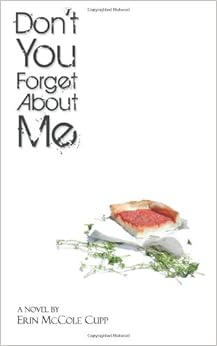
A few weeks ago I was contacted by a lovely blogger/author (Erin McCole Cupp) spreading the word about her new book, Don't You Forget About Me, which she described as a "Theology of the Body Murder Mystery." Naturally I was intrigued. I checked it out on Amazon, read the preview, and immediately bought the Kindle edition. And then read it in, um, two days.

The story starts with the main character, Cate, a successful-but-still-a-little-insecure author, about to head back to her hometown for the funeral of her old principal-- a place where her growing-up years were, shall we say, difficult. But the visit home, which starts out only as awkward as expected, takes a turn for the worse when strange things start happening, including a mysterious death. Cate and her grade-school crush, Gene (now an OB/GYN) find themselves investigating and getting drawn in deeper than might be good for them. What is the Curse of '87? How did Sister Thomas Marie really die?

This book was great because it worked on two levels. The "murder mystery" part can stand on its own as an exciting story with intrigue and unexpected twists. The characters are interesting and easy to identify with. But there are also interesting "theology of the body" questions brought up-- what happens to women (not just physically, but emotionally) who are put on contraceptives, even when it's for totally licit, non-contraceptive purposes? And why are such treatments so prevalent, even when there might be better options out there? The questions aren't answered in a trite way-- they aren't even really answered at all, but I think that's a good thing (especially for a novel). It's sometimes enough to just ask the questions. The great thing was that the "theology of the body" bits were woven into the story so that they didn't really seem at all unnatural or tacked-on.

Have I piqued your interest yet? Read some more reviews here, then go read the book! Plus-- guess what! There's a promotion running on the Kindle version through June 12... call me crazy, but I just clicked on the link and it looks like it's free (as in ZERO DOLLARS) for the moment!

Forgot to add this link at first... See what others are reading over at Housewifespice.

Wednesday, May 28, 2014

what we're reading wednesday: the no. 1 ladies' detective agency


I just finished The No. 1 Ladies' Detective Agency by Alexander McCall Smith, and thoroughly enjoyed it. The story centers around Precious Ramotswe, a take-charge woman in Botswana who decides to open a detective agency and become a private investigator. She has no experience, but she has confidence that her determination, sharp mind, and insight into human nature will see her through-- and so they do!

The book is written in a unique, rather charming style which is reminiscent of verbal storytelling. There are tangents that veer off the narrative path, parenthetical explanations, and commentary like "for as everyone knows..." or "of course, there is only one thing that could..."

I highly recommend it, if you haven't read it! It's not a young adult novel, but I think older teenagers would enjoy it. There are, as a warning, a few references to marital infidelity and violence (including murder), and one rape scene which, while not explicit at all, is pretty obvious as to what is going on. But they're minor parts of the book-- most of the it is focused on Mma Ramotswe's cleverness. (Mma and Rra are the female and male honorifics in Setswana, respectively.) I'm definitely planning on reading more in the series!

Linking up at Housewifespice! (Or I will, once the linkup exists.)


Thursday, May 15, 2014

what we're reading wednesday: something other than god


(Okay, it's early Thursday morning for me, but I wrote this post yesterday.)

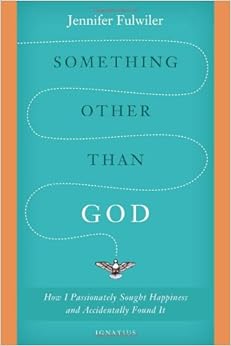
I'm sure most people reading this post have already read or started Something Other Than God by Jen Fulwiler, so I don't need to provide a synopsis. I really, really enjoyed it (*cough*readitin24hours*cough*) and was actually brought to tears more than once. A few things about it really struck me:

1. I thought she did a phenomenal job of really giving us a look inside the head of an intelligent atheist. Reading the early chapters, I really felt like I was truly seeing things from that worldview, not just looking at it from the outside. That's a pretty remarkable thing, especially for someone who's never not believed in God.

2. The final chapters made me excited to be a Catholic convert again. There was a recent post by Katrina at The Crescat talking about the glow and enthusiasm of the new convert, and how that enthusiasm can fade a bit over time. She points out that the excitement often transforms into a deeper familiarity, which isn't a bad thing... but I think the periodic renewal of that excitement is very valuable, too. We're rational beings, but we're also emotional. Knowing the True and striving for the Good are great things, but it's also great to thrill to the Beautiful. And this book helped me find that thrill again. 

3. I was really struck by the passage where Jennifer comments on how much easier it is to strive to be good after reading about the lives of the saints, rather than reading about theology/philosophy/morality in theory only. I don't know why this never occurred to me before, but when I read that paragraph, it hit me like a thunderbolt. I suspect it's also an excellent remedy for those feelings of superiority and holier-than-thou smugness that can creep in when you're not looking-- there's nothing like looking straight at undiluted goodness and bravery to serve as a healthy slice of humble pie. Of course the life of Christ is the ultimate story of goodness and bravery, but we've heard it so often that, sadly, it can sometimes lose its shock value. Fortunately, the Church is just brimming with holy people to read about, each one gloriously unique and bringing a fresh perspective to holiness. 

4. I would, in a second, recommend this book to anyone who wants to know more about Catholicism-- especially if they're skeptical about it. As is pointed out in the passage where Jen and Joe are reading the blog comments from Steve G., the only thing that really distinguishes Catholicism from Protestantism is the belief in the authority of the Church (if you believe in that authority, everything else follows naturally), and this book explains that so well. (I loved the analogy to the Supreme Court and the Constitution.) I'm seriously considering giving a copy to my Evangelical parents because it's such a great, clear explanation. I think my dad, especially, would like it.

Now I just need to nag Jack to finish it, because I'm so anxious to have someone to discuss it with!

Linking up with Jessica at Housewifespice! 

Wednesday, May 7, 2014

what we're reading wednesday: the giver


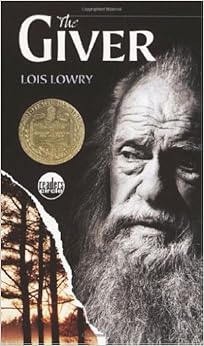
Can you believe I never read The Giver by Lois Lowry before now? I have a weakness for "young adult future dystopian" novels, and this one was, as far as I can tell, basically the first book of that genre.

It starts off following Jonas, the main character, who lives in a seemingly ideal community where everything is organized, everyone follows the rules, and all citizens are useful, content, and cared-for. Jonas is about to undergo the Ceremony of Twelve, when all twelve-year-olds in the community are assigned their future careers by the Elders-- who carefully take each youth's personality and ambitions into account, so that everyone gets exactly the right job. Jonas is selected for a job of special honor-- he is to be the next Receiver of Memories.

It is as he starts to receive Memories from the previous Receiver-- now the Giver of Memories-- that Jonas realizes his community may not be as ideal as he once thought.

I really enjoyed this book. Obviously it's won awards and become something of a modern classic, so you don't need me to tell you it's well-written and thought-provoking and troubling (in the best sense). If you haven't read it and are wondering whether it's appropriate for your child, be aware that it does address mature ideas, including euthanasia, death/war, and (quite subtly) sexual attraction. But I think it does so very appropriately, bringing to light the horror of the circumstances that should be horrifying, but not gratuitously.


Linking up with Jessica at Housewifespice! (Next on the list-- Something Other Than God, which FINALLY CAME IN THE MAIL!! I'm already 1/3 of the way through... after owning it for approximately 16 hours, a large proportion of which was taken up by annoying things like cooking dinner for my family, my workout group, and sleeping. I told my husband he could read it after I'm done, which will probably be when he gets home from work today.)

Thursday, May 1, 2014

what we're reading wednesday: miracles


I recently finished Miracles by C.S. Lewis and it was, of course, wonderful. It was a bit denser than some of his other books, with points and arguments that make you read slowly so you can really think about them. (Not like, "What was he saying? Let me go back because I didn't understand," but more like, "Wow, I never thought of that... it makes so many things make sense that now I want to stop and think about everything in this new light.") 

He starts off first by defining miracles, and what each "side" (those who believe in them and those who don't) really means, and the worldviews behind those beliefs. Then he systematically addresses the logical and philosophical errors-- mainly the errors of those who don't believe (since he obviously does), but sometimes the errors of those who do. He ends by discussing the miracles of Christ and how they relate to the "old creation" and the "new creation."

When I describe it like that-- "systematically addressing logical errors"-- it sounds as if it will be dry and boring. But Lewis is always so clear and conversational that it's less like reading a philosophical treatise, and more like having an interesting discussion with a wise friend. I highly recommend it!

Linking up with Jessica at Housewifespice!

(I swear I published this on Wednesday, but Blogger is strange sometimes.)

Wednesday, April 23, 2014

what we're reading wednesday: the maze runner


The Maze Runner by James Dashner was an interesting variation on the "future dystopian teen novel" theme, starting from scratch with the main character in a brand new environment with no memory of his past. He and the reader have to learn everything together. The plot was fast-paced and interesting enough to make me want to keep reading.

The biggest negative for me was that I just didn't feel much connection to the characters. I feel like I barely know what kind of person the main character is, except that (based on his actions) he's pretty brave and willing to risk his life for others. That's basically it. I don't have a clear idea of whether he's friendly or shy, kind or gruff, patient or impatient, clever or not. Supposedly (the book tells me) he's extremely smart, though I didn't see much evidence of it. There were lines like "Thomas didn't know what he meant by Banishment, but it sounded bad," and I'd want to yell at the book, "They just said a few pages ago that being Banished means you're left outside the walls at night, dummy!!"

A related complaint: I've rarely read a book that describes so many emotions while making me feel so few. It was full of lines like these: "Thomas felt a sudden surge of rage." "Thomas was happy with the conversation." Thomas couldn't help feeling a shot of pure elation at the thought." "Thomas was overwhelmed with sadness." To quote my 7th grade English teacher-- show it, don't tell it!

One last gripe: the narration was written in a strange style. On the one hand it was full of teenage-boy-isms (which I assume was deliberate) like "Dinner was awesome" and "Thomas was pumped"-- meant, I suspect, to reflect what Thomas would have said, since it was a third-person subjective narration. But at the same time, it never felt like we were really inside Thomas' head (see above complaints) so it came across as just feeling like... just immature writing, like a high schooler's short story. At least that's how I felt when reading it.

All of these complaints make it sound as if I didn't enjoy the book. I did-- I read it over the course of less than 3 days, after all! But it's a book that I wanted to keep reading because I was curious about what was going on, not so much because I cared what happened to the characters. 

If you like young adult dystopian novels, you'll enjoy it. But it probably won't become one of your all-time favorites or blow your mind or change your life. (But what am I saying-- if you like young adult dystopian novels, you've probably already read it. I guess I'm kind of late to the game on this one.) I'll probably get around to reading the sequels, but I'm not in a rush to do so.

Linking up with Jessica at Housewifespice. 

Wednesday, April 16, 2014

what we're reading wednesday: the tipping point


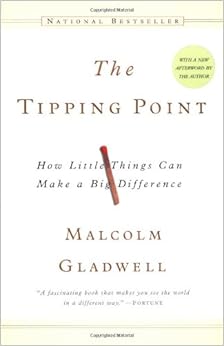
I recently finished reading The Tipping Point by Malcolm Gladwell. (I had actually read Blink, which he wrote later, last year. See my review/summary here, about halfway down.) Where Blink was all about how we make snap decisions, The Tipping Point was about how social "epidemics" happen. What makes a brand or a restaurant suddenly popular? What makes crime waves go up and down? Why was Paul Revere so much more successful in spreading his message than William Dawes? It's often something surprisingly small.

In this book, Malcolm Gladwell explores what those things are that can push a message or trend to the "tipping point." He explains that to truly take off, a message must follow three rules: The Law of the Few (a few key people with certain social characteristics will be the ones most important in spreading the message), The Stickiness Factor (how memorable the message itself is), and The Power of Context (our environment has an unexpectedly strong influence on our behavior).

It was altogether engrossing. Highly recommend!

Linking up with Jessica at Housewifespice!

Wednesday, February 26, 2014

what we're reading wednesday

Joining in for the first time in the What We're Reading Wednesday linkup with Housewifespice, in an attempt to keep my 7 Posts in 7 Days commitment!


Into the Still Blue by Veronica Rossi

This is the third book of a young adult dystopian trilogy. The book is set in a future post-apocalyptic world, three hundred years after the onset of a devastating, worldwide, electrical atmospheric phenomenon called the Aether.  When the Aether first appeared, a few thousand people were chosen to live in protected cities safe from the Aether where they spent most of their time in virtual reality, and the rest of the people remained on the outside to survive as best they could. The main characters are two teens named Aria and Perry, one from inside the pods and one from outside. 

This third book was just as enjoyable as the first two-- which is to say, a lot. The villain in the book makes you genuinely hate him, but at the same time he's an interesting character. Aria and Perry are fun to read about, and their relationship (of course they have a relationship, this is a young adult dystopian novel we're talking about) is actually believable. I'd recommend this series to older teens and up; there is some violence as well as a few sexual references.

The next book I'm working on is Mansfield Park-- I'm about 3/4 of the way through. (How obnoxious is Mary Crawford? Don't you just want to smack her?)